


Constitutional Law
Nov. 16, 2026
Can the Foreign Emoluments Clause be resurrected?
Renewed scrutiny of President Trump's foreign financial dealings could force courts to confront unresolved questions about who has standing to enforce the Constitution's Foreign Emoluments Clause and what remedies are available for violations.



Marc D. Alexander
Attorney and Mediator
Alternative Resolution Centers (ARC)
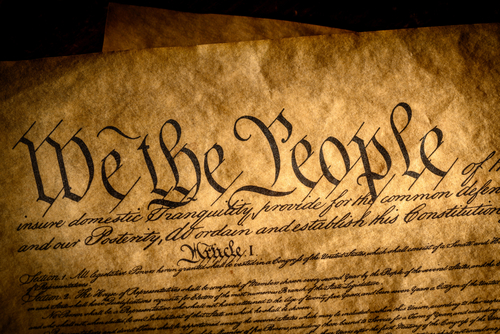
The United States Supreme Court has never decided who, if anyone, has standing to challenge a president's violation of the Foreign Emoluments Clause. That could change with the seating of an incoming Democratic Senate and House majority in 2027.
There are two Emoluments Clauses in the Constitution, one foreign and one domestic. The foreign clause provides: "No Title of Nobility shall be granted by the United States: And no Person holding any Office of Profit or Trust under them, shall, without the Consent of the Congress, accept of any present, Emolument, Office, or Title, of any kind whatever, from any King, Prince, or foreign State." The domestic clause provides that the president's salary shall not increase or decrease during the president's term. The president cannot receive emoluments from the United States or states. The foreign clause allows for consent of Congress, and the domestic clause does not. We shall concentrate on the foreign clause. Though that clause requires congressional consent for the president to keep an emolument, it does not expressly create a cause of action or a means of enforcement, other than withholding consent.
The Founders carried over the foreign clause from the Articles of Confederation. It was intended to prevent corrupt American leaders from accepting emoluments from foreign governments and becoming beholden to foreign interests. Gouverneur Morris expressed concern about the risk that a gift could result in foreign interference during an impeachment discussion at the Federal Convention in 1787: "Our Executive was not like a Magistrate having a life interest, much less like one having an hereditary interest in his office. He may be bribed by a greater interest to betray his trust; and no one would say that we ought to expose ourselves to the danger of seeing the first Magistrate in foreign pay, without being able to guard agst. it by displacing him. One would think the King of England well secured agst. bribery. He has as it were a fee simple in the whole Kingdom. Yet Charles II was bribed by Louis XIV." When Benjamin Franklin departed his post as Minister to France in 1785, he received a miniature portrait of King Louis XVI, surrounded by 408 diamonds. Franklin sought, and received, permission from Congress to keep the gift.
Federal courts and scholars have offered broad and narrow definitions of "emolument." Under the broad definition, an emolument is any profit, gain or advantage. Under a narrow definition, adopted by the Department of Justice in defense of President Donald J. Trump, a fair-market transaction would not be an emolument. Under the narrow definition, a fair-market transaction would not be covered. For example, if a hotelier president rents rooms in a Washington, D.C. hotel to foreign leaders, at a fair-market price, the transaction would not be a violation under the narrow definition. To further narrow the definition, some scholars have counterintuitively argued that under the Constitution, the president does not hold an "Office of Profit or Trust," in which case the president would be a leader who doesn't require consent to keep an emolument.
During Trump's first term, three cases examined the Foreign Emoluments Clause and produced contradictory rulings. In Citizens for Responsibility and Ethics in Washington (CREW) v. Trump, 276 F.Supp. 3d 174 (S.D.N.Y. 2017), a watchdog group and hotel interests sought a declaration that the president had violated the foreign and domestic Emoluments Clauses, an injunction against further violations and access to financial records. The district court dismissed for lack of standing, but the Second Circuit reversed, holding that the business competitors had standing. CREW v. Trump, 939 F.3d 131 (2d Cir. 2019), amended, 953 F.3d 178 (2d Cir. 2020).
In District of Columbia and Maryland v. Trump, 291 F.Supp.3d 725 (D. Md. 2018), the court found standing to challenge the president's connection to the Trump International Hotel in Washington, D.C. It then read "emolument" broadly to mean "profit," "gain," or "advantage" and found that the plaintiffs had stated a claim. 315 F.Supp.3d 875 (D. Md. 2018). The Fourth Circuit reversed, finding the plaintiffs' interests too attenuated and abstract to confer standing. In re Trump, 928 F.3d 360 (4th Cir. 2019). The en banc court later denied the president's mandamus petition because he had not shown a clear right to relief. That let the suit proceed with standing unresolved. In re Trump, 958 F.3d 274 (4th Cir. 2020).
Because the Foreign Emoluments Clause requires congressional consent, 215 Democratic members of Congress sued, claiming they were denied a vote on whether to consent. The district court found standing, 335 F. Supp. 3d 45 (D.D.C. 2018). The D.C. Circuit reversed, reasoning that a minority of each house, not authorized by either to sue, cannot claim an institutional injury to all of Congress. Blumenthal v. Trump, 949 F.3d 14 (D.C. Cir. 2020), cert. denied, 141 S.Ct. 553 (2020).
After Trump left office on Jan. 20, 2021, the Supreme Court on Jan. 25 vacated the CREW and District of Columbia decisions and remanded with instructions to dismiss as moot. The Supreme Court therefore never resolved the standing question, leaving no definitive nationwide ruling on who may challenge a president's alleged violation of the Foreign Emoluments Clause.
Recently, a shareholder of Circle Internet Group, which issues a stablecoin, brought a derivative lawsuit on Circle's behalf against World Liberty Financial, Trump and Steve Witkoff. The shareholder alleges that World Liberty Financial is a competitor and advances a competitor-standing theory similar to the one adopted by the Second Circuit in CREW. The suit alleged "the unlawful sale of a stake in President Trump's cryptocurrency company to a foreign actor. Before assuming office, the President agreed to sell a portion of his family's cryptocurrency company in exchange for $500 million routed from the United Arab Emirates." The suit also alleges a plan to pump the value of the president's crypto holdings "by purchasing $2 billion in the President's brand-new digital currency." Greenberg v. Trump, No. 1:26-cv-03686 (D.D.C., filed Oct. 22, 2026).
There have been several subjects of an emoluments challenge, including the Qatari 747 "flying palace." It was reported that a DOJ memo addressed the legality of the transaction and that the memo had not been made public. The 747 has been described as a gift to the United States government rather than to the president, though its final disposition remains unclear. CBS reported a plan to give the jet to Trump's presidential library once his term ends. A second subject is crypto deals in which Trump or his entities may have an interest and UAE governments or sovereign funds may have invested. A third subject is Gulf real estate deals. A fourth subject is purchases by foreign powers in Trump Tower and rentals in Trump International Hotel in D.C. Consider the evidentiary rat's nest, obstacles and delays confronting investigators who would try to follow the money.
A Supreme Court ruling on standing would bring welcome clarity, but it would not guarantee a trial on the merits. The first obstacle is time. A case filed today might not reach the Court and result in a decision before the president's term ends in January 2029. Claims for declaratory and injunctive relief could again be dismissed as moot, as they were in 2021.
Second, the court could hold that the clause presents a political question. Because the Constitution assigns the power of consent to Congress, Congress alone must decide whether the clause has been violated, leaving oversight and impeachment as the only remedies.
Third, the Court could hold that denial of consent injures Congress as an institution, so only Congress itself, acting through majorities of both houses, may authorize a suit. That condition was out of reach in 2020 but may be attainable once new Democratic majorities are seated.
Fourth, the Court could adopt the narrow definition of "emolument," placing fair-market transactions beyond the clause, or it could distinguish a payment to the president from a benefit to a company or trust in which he holds an interest.
Fifth, where the challenged conduct is an official act, such as accepting an aircraft on behalf of the United States, the president may claim immunity.
Finally, the Court could limit the available remedies. The clause creates no express right to sue, the Court has long been reluctant to enjoin a sitting president, and it has barred damages suits arising from the president's official acts.
No federal court has ever ruled on the merits of whether a president has violated the Foreign Emoluments Clause, much less on how to remedy a violation. Whether the merits will ever be reached by a court (rather than a long-shot congressional impeachment proceeding) is an open question. Though the Founders were concerned about the corruption of our leaders by foreign powers, and foreign interference in our affairs, the Foreign Emoluments Clause could end up as a zombie clause of the Constitution.
Submit your own column for publication to Diana Bosetti
For reprint rights or to order a copy of your photo:
Email
Jeremy_Ellis@dailyjournal.com
for prices.
Direct dial: 213-229-5424
Send a letter to the editor:
Email: letters@dailyjournal.com