


Labor/Employment,
Administrative/Regulatory
Jan. 2, 2026
AB 250: More time for sexual assault survivors


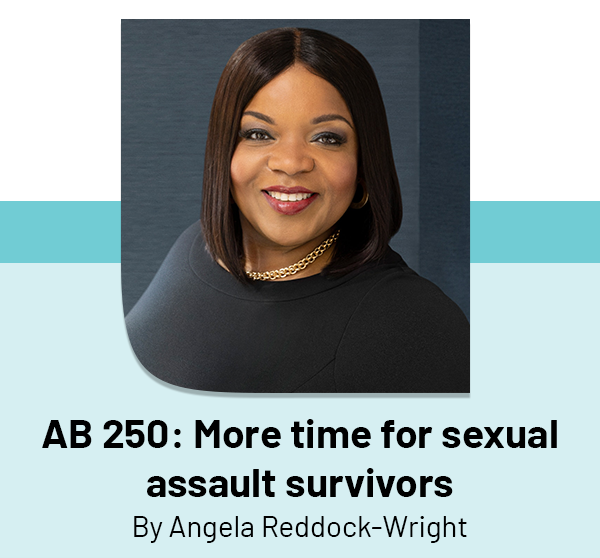
Angela Reddock-Wright
Mediator and Neutral
Signature Resolution
Phone: (213) 433-5767
When Governor Newsom signed AB 250 into law on Oct. 13, his goal was to provide expanded support to victims of alleged sexual assault who were otherwise time-barred from pursuing legal claims against their alleged abusers. The Justice for Survivors of Sexual Assault Act, which takes effect Jan. 1, 2026, will extend the statute of limitations for these claims until Dec. 31, 2027. It will also revive related claims, such as wrongful termination and sexual harassment, that stem from the original alleged sexual assault.
Three years ago, legislators enacted AB 2777, opening a window for survivors of prior alleged sexual assault claims to bring otherwise-expired claims against their alleged abusers. Under the 2022 law, survivors of alleged sexual assault that occurred on or after Jan. 1, 2009 were given until Dec. 31, 2026 to file suit. Survivors of alleged sexual assaults that occurred before Jan. 1, 2009 were given a one-year "lookback" window - from Jan. 1, 2023, through Dec. 31, 2023 - to file suit if an entity responsible for their harm had covered up a prior alleged sexual assault by the perpetrator.
Time limit extension
AB 250 now extends the timeframe for filing claims for alleged past abuse, recognizing that recovery from abuse does not happen according to a set schedule. Amended Code of Civil Procedure Section 340.16 states that claims for damages suffered as a result of an alleged sexual assault occurring on or after a plaintiff's 18th birthday - claims that would otherwise have been barred before Jan. 1, 2026 because the statute of limitations had expired - are revived, and causes of action can proceed if they are already pending in court as of that date. If they have not been filed by that date, such actions may now be commenced between Jan. 1, 2026 and Dec. 31, 2027.
The law opens up a new two-year "lookback" window - from Jan. 1, 2026 through Dec. 31, 2027 - for survivors of alleged sexual assaults in which an entity responsible for the harm engaged in a cover-up of a prior alleged assault. AB 250 also revives related claims, such as wrongful termination or sexual harassment, that stem from the alleged sexual assault.
How it works
To bring a claim during the two-year lookback window under AB 250, a survivor must be able to claim that they were assaulted, that an entity is legally responsible for their injury, and that the responsible entity engaged in a cover-up or attempted cover-up of the incident. This means that the entity allegedly engaged in a "concerted effort" to hide evidence, acting to prevent information from becoming public such as using nondisclosure or settlement agreements to force individuals to stay silent.
AB 250 holds both the alleged perpetrators and entities that allegedly covered up or tried to cover up the crimes accountable for any harm inflicted. It pins legal responsibility for damages on both the perpetrator and those who cover up or attempt to cover up a sexual assault. Failure to allege a cover-up against one entity will not affect a plaintiff's right to revive claims against other entities or individuals. Public entities are exempt from the bill's provisions and are not required to indemnify perpetrators of sexual assault.
Conclusion
Because the law extends the statute of limitations for claims until Dec. 31, 2027, companies, entities or organizations that may have acted to protect key employees could be liable for sexual assaults perpetrated by those employees years ago. Both the organization and the perpetrator - even if that individual was not involved in the cover-up - could be subject to legal action despite the expiration of the original statute of limitations.
Angela Reddock-Wright is a neutral with Signature Resolution, specializing in employment single-plaintiff and class action cases, Title IX education law, mass-tort sexual abuse and other claims, faith-based and religious institution matters, and hazing and bullying claims.
For reprint rights or to order a copy of your photo:
Email
Jeremy_Ellis@dailyjournal.com
for prices.
Direct dial: 213-229-5424
Send a letter to the editor:
Email: letters@dailyjournal.com