


Government,
Constitutional Law
Dec. 31, 2025
Today's gerrymandering arms race shows the need for a national solution
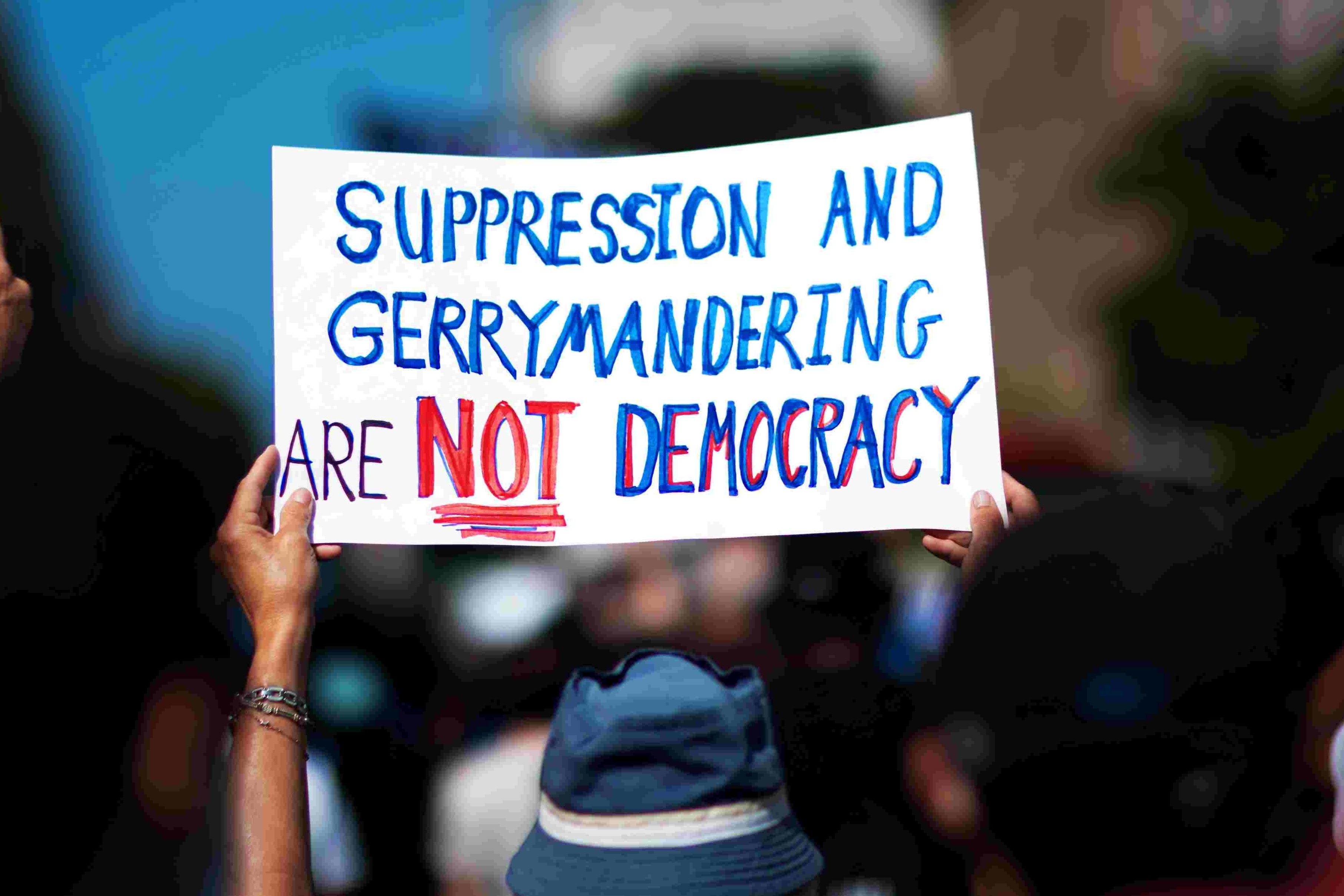
As states wage an escalating redistricting arms race, the only way to stop politicians from handpicking their voters is a national ban on partisan gerrymandering that puts independent mapmakers -- not self-interested lawmakers--in charge.



Congressional Reform for a New Era
In the aftermath of Watergate, Congress enacted sweeping
reforms to restore public trust and strengthen accountability, including
campaign finance rules, the creation of the Federal Election Commission, the
Ethics in Government Act, and the War Powers Resolution--measures that reshaped
the balance of power and continue to shape American governance five decades
later.
Against that backdrop, the Daily Journal invited
constitutional law professors, legal historians, and good-government
advocates--experts in constitutional structure and reform from across the
ideological spectrum--to answer a timely question: If Congress were to enact a
new round of reforms today, meant to endure for the next 50 years, what one
reform would you propose, and why? This is the final installment in a six-part
series.
The redistricting arms race that began over the summer has
put on full display the need for a national solution that removes
gerrymandering as a weapon to be wielded on the political battlefield. More
than 10 states have either been pressured by the two major political parties to
redraw their congressional maps mid-decade or have already done so this year,
all with an eye to influencing the outcome of the 2026 midterm elections, which
will determine the balance of power in the U.S. House of Representatives.
This, of course, includes California, where voters on Nov.
4 strongly supported
Proposition 50, which temporarily suspends the state's independent
redistricting process and puts a new congressional map in place that favors
Democratic candidates. It is important to note, however, that Californians also
endorsed the idea of addressing this issue on a larger scale. Proposition 50 includes support for a constitutional
amendment requiring redistricting by "fair, independent, and
nonpartisan redistricting commissions nationwide." This sentiment reflects
public opinion more broadly, which clearly disfavors
partisan gerrymandering.
Fortunately for Californians and democracy-supporting
Americans everywhere, a constitutional amendment is not necessary to end
partisan gerrymandering. Rather, the U.S. Constitution already empowers
Congress to regulate how congressional maps are drawn.
Comprehensive legislation to stop gerrymandering--the Freedom to Vote Act--was
first introduced in 2021 and passed the House, but failed to get a vote in the
Senate because of a Republican filibuster. The bill would have banned partisan
gerrymandering by outlawing redistricting plans drawn with either the intent or
the effect of materially favoring or disfavoring a political party. It also
would have effectively reversed Rucho v. Common Cause, a disastrous U.S. Supreme Court
ruling from 2019 that says federal courts may not review redistricting maps, no
matter how egregious the gerrymander. The bill also established mandatory
criteria for states to use when drawing congressional maps, among many other
provisions.
A more recent piece of legislation--the FAIR MAPS Act--goes
further by requiring maps to be drawn by independent redistricting commissions
(IRCs), which, in their purest form, are composed of
citizens who are far less prone to partisan bias than politicians
with a vested interest in maps that favor their reelection. IRCs have worked
well in several states where they have been introduced, including California and the state of Michigan. California's IRC did not have any involvement
in Proposition 50, and it regains its authority to lead the redistricting
process after the next census.
At Campaign Legal Center, we
have consistently sounded the alarm
about our political system's vulnerability to gerrymandering for years.
Gerrymandering has been a factor in American politics since the earliest days of our
country. However, its use intensified immensely
during the 2010 redistricting cycle, when partisan actors began using new
sophisticated computer technology, paired with enormous amounts of personal
data, to handpick voters for specific districts based on which party they were
likely to vote for, in effect fixing election outcomes.
The main casualty of these actions has been voters'
ability to elect lawmakers who best represent their communities and their
interests. Gerrymandering divides cohesive communities, increases political
polarization, makes government less responsive, and produces a Congress that is
less representative of the American people. In a healthy democracy, lawmakers
should be incentivized to enact policies favored by their constituents. This
natural order of politics is profoundly distorted when a politician knows a
district has been drawn to virtually guarantee their reelection.
Simply put:
Elections should be determined by voters, not politicians who manipulate voting
maps. The solution to this scourge on our democracy is a federal law that
includes an explicit nationwide ban on partisan gerrymandering and mandates
independent redistricting in every state.
Banning partisan gerrymandering and adopting nonpartisan
redistricting nationwide would go a long way toward establishing a level
playing field and allowing voters to choose their elected representatives
instead of the other way around. These reforms would also constrain the
impulses of political parties to seek advantage over each other using the
redistricting process. Instead, the success or failure of politicians would
hinge more concretely on their ability to meet the needs of their constituents,
which is as it should be.
This is the path our country--and our lawmakers--must choose
if we ever hope to bring the gerrymandering arms race to an end. Without a
national solution, this arms race is just a race to the bottom, and the
fundamental concept of a representative form of self-government will be forever
under threat.
Editor's Note: In the aftermath of Watergate, Congress enacted sweeping reforms to restore public trust and strengthen accountability, including campaign finance rules, the creation of the Federal Election Commission, the Ethics in Government Act, and the War Powers Resolution--measures that reshaped the balance of power and continue to shape American governance five decades later.
Against that backdrop, the Daily Journal invited constitutional law professors, legal historians, and good-government advocates--experts in constitutional structure and reform from across the ideological spectrum--to answer a timely question: If Congress were to enact a new round of reforms today, meant to endure for the next 50 years, what one reform would you propose, and why? This is the final installment in a six-part series.
Submit your own column for publication to Diana Bosetti
For reprint rights or to order a copy of your photo:
Email
Jeremy_Ellis@dailyjournal.com
for prices.
Direct dial: 213-229-5424
Send a letter to the editor:
Email: letters@dailyjournal.com